


By Emma Woller, 2024 Michigan GROWN, Michigan GREAT Ambassador
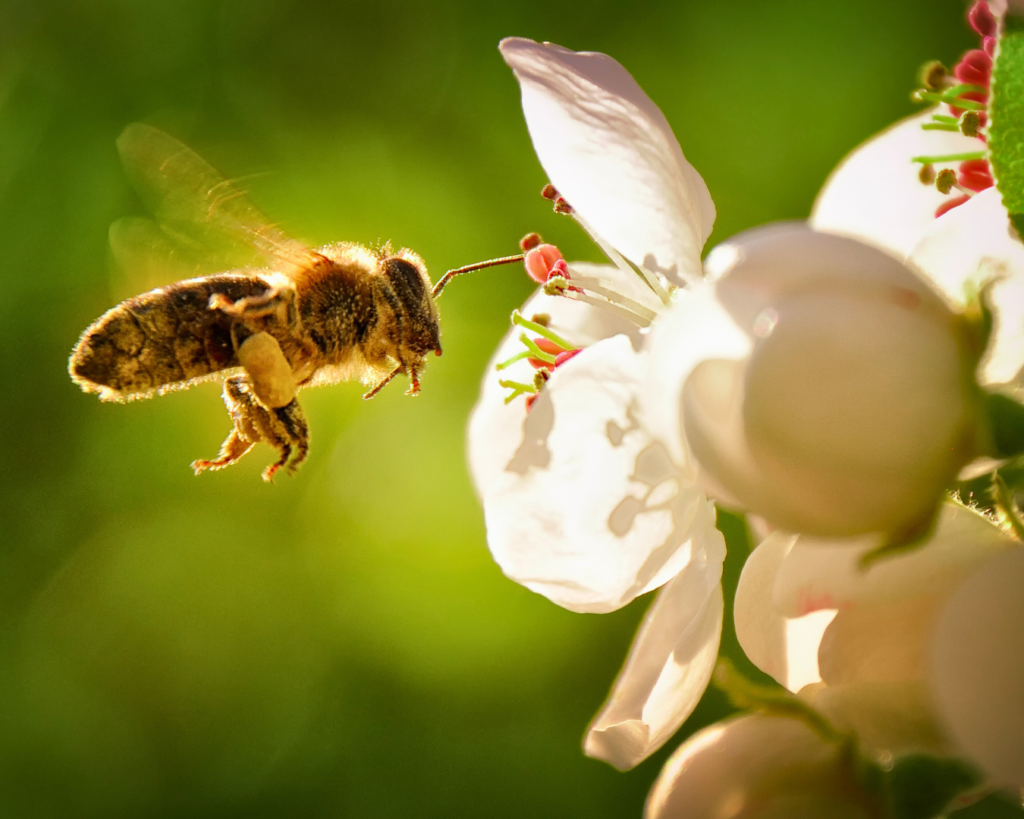
 From the urban gardens of Detroit, to the orchards of Traverse City, and all the area in-between, Michigan’s bees tirelessly pollinate crops, ensuring the production of fruits, vegetables, and wildflowers. Michigan is home to more than 400 different species of bees including the familiar honeybee, bumblebees, mining bees, and carpenter bees. One of the key reasons bees are so important is their role as pollinators. When bees go flower to flower, they collect nectar and pollen then transfer that pollen grains between flowers, plants for fertilization, and seed production. This process is essential for the reproduction of flowering plants, such as apples, cherries, blueberries, and squash that can be found in Michigan. Without these bees, these crops would face reduced yields which can be devastating to the states agricultural economy and its food security.
In many Michigan orchards, you will find honey bee boxes throughout the orchard. Why you may ask? The honey bees play an important role in carrying the pollen between blossoms which produce the fruit. As soon as the leaf buds open on the tree in the spring the bees start to pollinate. As soon as the blossoms turn pink and white, these gorgeous flowers are irresistible to the honey bees. When the flower is open, the sweet nectar and scent attract the bees to the tree. Bees love nectar and need it to feed their colonies, and the trees need bees to support their growth. This exchange plays an important role in our food system. In the United States 90% of apple crops are pollinated by bees.
 When a honey bee collects nectar, it brushes up against a part of the flower called the stamen. The bee doesn’t just do this intentionally, it just happens when visiting a tiny flower. The stamen then deposits grains of pollen on the hairs of the honey bee. When the bee buzzes off to visit another apple flower, it carries this pollen with it. The still hungry bee will then collect nectar from a second flower. As it lands, the pollen on the bee is transferred to the pistil, a different part of the flower located in the center of its leaves. The pistil needs to receive the pollen to fertilize the apple tree. After this, the tree can begin producing fruit. The pollen from a trees flower will not pollinate other flowers on the same tree. Trees need bees to help carry pollen from another tree to produce their fruit.
Michigan’s bees are not just buzzing insects, they are vital contributors to the states biodiversity, agriculture productivity, and environmental health. Their conservation is essential for maintaining the balance of ecosystems across Michigan such as the urban gardens of Detroit and orchards of Traverse City. By understanding and protecting these remarkable pollinators, we can imagine the future of the food supply and the beauty that defines the Great Lakes State.

Emma Woller is a 2024 Michigan GROWN, Michigan GREAT Ambassador from Montague, Michigan. Emma grew up on her family’s farm where they farmed 1,400 acres with over 300 of them being asparagus. Emma is a 2024 graduate of Michigan State University where she earned her bachelors in Crop and Soil Science.